“The Indus River, which once sustained our community, no longer reaches us. The sea has encroached on our land, diminishing our hopes.”
The Indus Delta in Crisis
Over the past fifty years, the Indus delta has lost approximately 92% of its active area, resulting in the conversion of fertile farmland into saline soils, the destruction of fisheries, and the displacement of local communities. The disappearance of mangroves, which serve as the delta’s primary coastal defense, has increased vulnerability to storms and flooding. Many community members and experts attribute this crisis not to natural causes but to policy failures. The construction of upstream dams and canals, along with the exclusion of the delta from water allocation agreements, has significantly reduced freshwater flows to the region. Climate change further exacerbates these impacts. This crisis endangers livelihoods, food and water security, climate resilience, and social stability, elevating it to a global issue that requires immediate policy intervention.

Why it Matters
The crisis threatens multiple SDGs and adversely impacts delta ecosystem and community well-being. The loss of agriculture and fisheries contributes to increased hunger and poverty (SDG 1, SDG 2). Reduced and unsafe water supplies threaten progress toward SDG 6. The degradation of mangroves and heightened exposure to storms present significant obstacles to SDG 13. Community pressures resulting from migration, poverty, and unequal resource distribution affects SDG 10 and SDG 11. Women experience increased workloads (SDG 5), while children have been deprived of education and exposed to hazardous labor conditions (SDG 4, SDG 3). These interconnected challenges underscore the urgent need for comprehensive solutions at all levels.
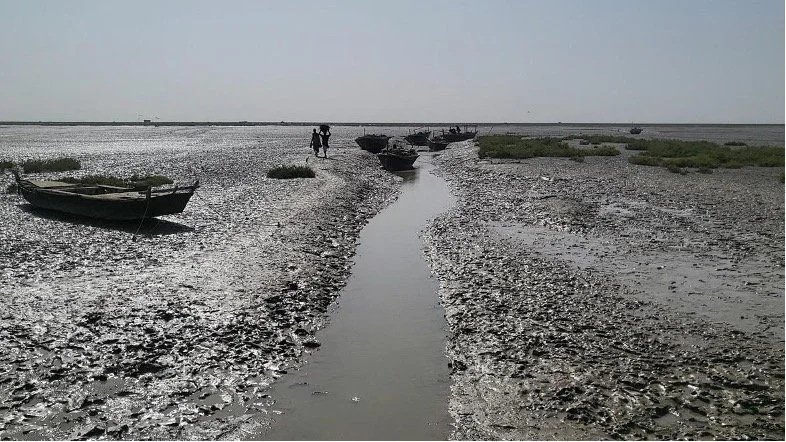
Areas that were once local community agricultural lands are now submerged during high tides. Photo: Abdul Waheed
What would a UN Convention on River Deltas do?
Building on the interconnectedness of challenges facing the Indus Delta, a UN Convention on River Deltas would advocate for environmental flows, encouraging governments to release river water, restore mangroves, fisheries, and farmland, and support livelihoods. It would promote Nature-based Solutions to reduce storm damage, enhance carbon sequestration, prevent erosion, and promote biodiversity. Adaptive agriculture policies would encourage the adoption of salt-tolerant crops, and implementation of land and soil restoration programs. Importantly, a community-driven-focused Convention could advocate investment in fisheries, eco-tourism, and conservation enterprises to create sustainable income and reduce vulnerability. Delta governance could be facilitated at the international scale through creation of a Delta Management Authority to coordinate agencies, ensure accountability, and empower communities against further decline. This would be aided by better mobilized international funding enabling restoration, adaptation, and community development. The aimed-for outcome is transboundary cooperation whereby the riparian states (India, Pakistan, Afghanistan and China) that share the Indus River Basin act engage in dialogue and promote joint management of a shared social- ecological delta system.
Contributed by: Abdul Waheed, Leibniz Institute of Freshwater Ecology and Inland Fisheries (IGB), Germany